
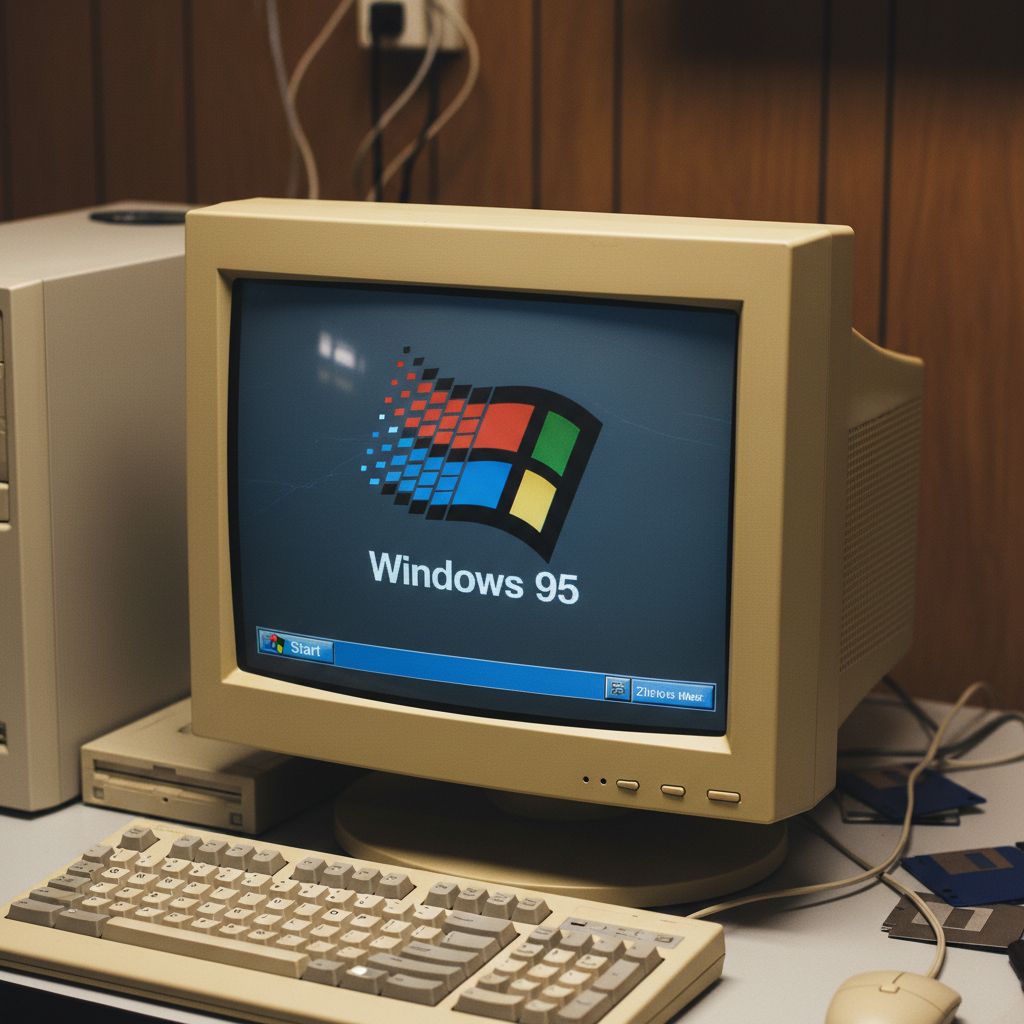
When Windows 95 launched on August 24, 1995, people lined up outside stores at midnight. Microsoft had convinced the world that an operating system release was a cultural event — and they were right.
The Story
Microsoft paid the Rolling Stones $3 million to use "Start Me Up" as the launch theme for Windows 95 — a song that includes the lyric "you make a grown man cry." Nobody seemed to notice the irony.
The Windows 95 launch was unlike anything the tech industry had seen before. Jay Leno hosted the launch event. The Empire State Building was lit in Microsoft's colors. Bill Gates and Jay Leno chatted on stage about the "information superhighway." It was part product launch, part rock concert, part cultural moment.
And what they were launching genuinely deserved the fanfare. Windows 95 introduced the Start button, the taskbar, and the concept of minimizing windows to the taskbar — interface conventions so intuitive that they're still in use 30 years later. It also brought plug-and-play hardware support, meaning you could connect a device and expect it to mostly just work.
Under the hood, Windows 95 was a dramatic improvement over Windows 3.1. It introduced long file names (finally, no more 8.3 character limits), 32-bit application support, and built-in TCP/IP networking for the emerging internet.
Internet Explorer 1.0 shipped just weeks after Windows 95 launched. The browser wars were about to begin.
Microsoft sold 7 million copies in the first five weeks. Entire families gathered around computers to watch the startup sequence. The "clouds" desktop and the four-color Windows flag became some of the most recognized images of the decade.
"We paid the Rolling Stones more than any band had ever been paid for a song. It was worth every penny."— Bill Gates, on the Windows 95 launch
Key Specs
Fun Facts
Microsoft paid the Rolling Stones $3 million to use "Start Me Up" as the launch theme.
The launch event was hosted by Jay Leno — Microsoft spent an estimated $300 million on marketing.
Windows 95 introduced the Start button, which Microsoft later tried to remove in Windows 8 — to universal outrage.
The first version of Internet Explorer shipped as an add-on for Windows 95 just weeks after launch.
Legacy
Windows 95 turned an operating system into a pop culture event and established the interface conventions — Start menu, taskbar, desktop shortcuts — that billions of people still use every day. It was the moment the PC truly became mainstream.